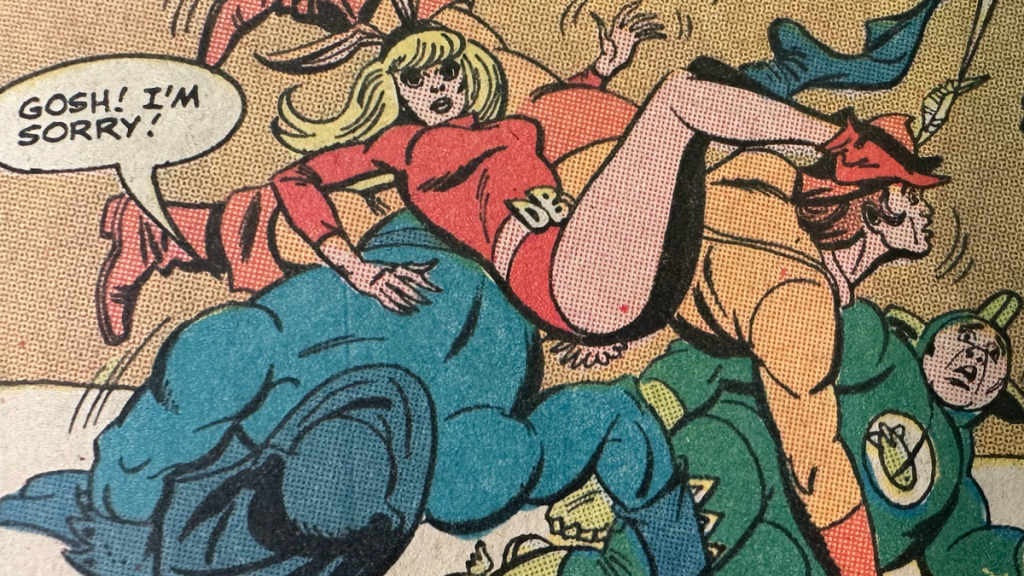
The Freedom Brigade
On an alternate earth, a team of superheroes fought crime for decades.
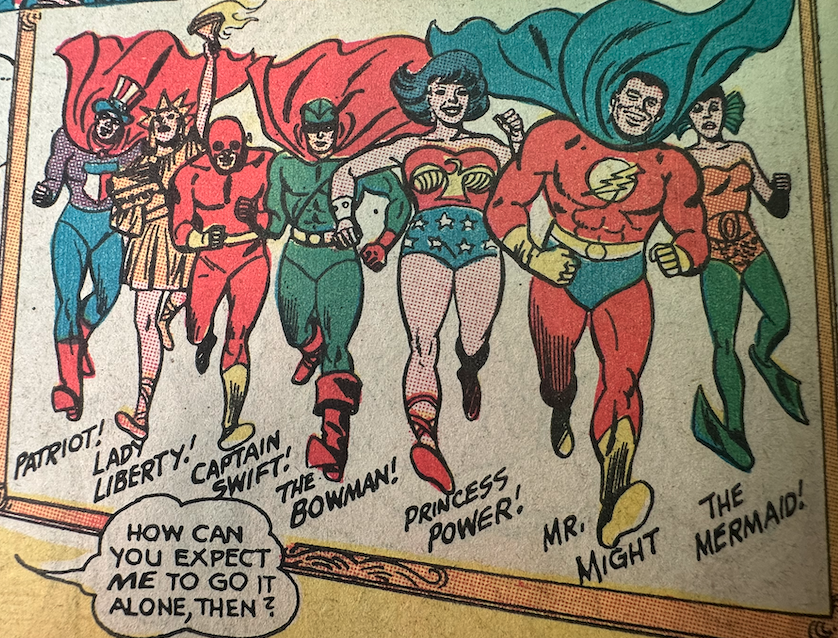
When they retired, they led private lives, married, and had children.
One day when their city of Megalopolis was threatened by a mad scientist…
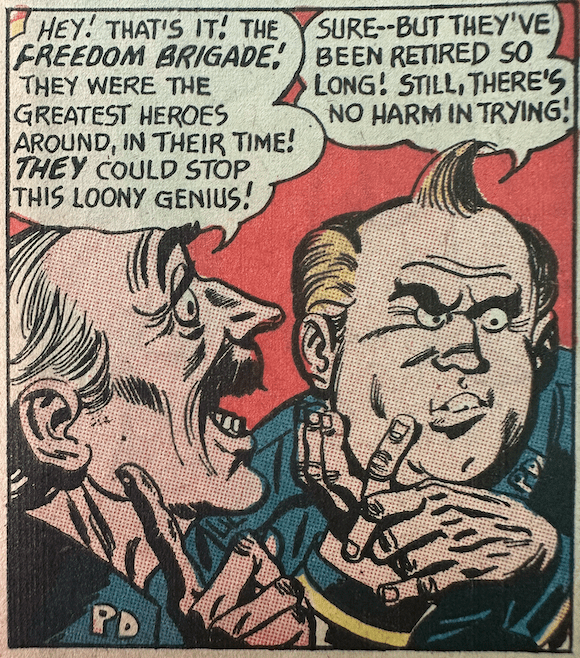
There was no harm in trying; however, the Freedom Brigade did not come out of retirement to help. Instead, Patriot and Lady Liberty encouraged their son, Myron, to join the children of the other members of their team to replace them…
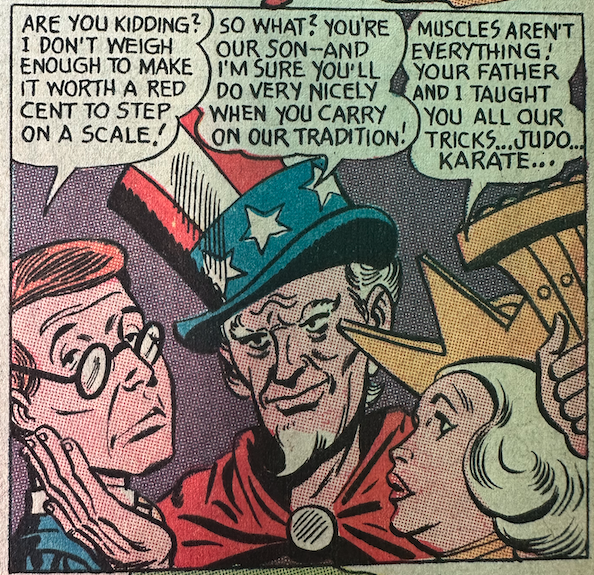
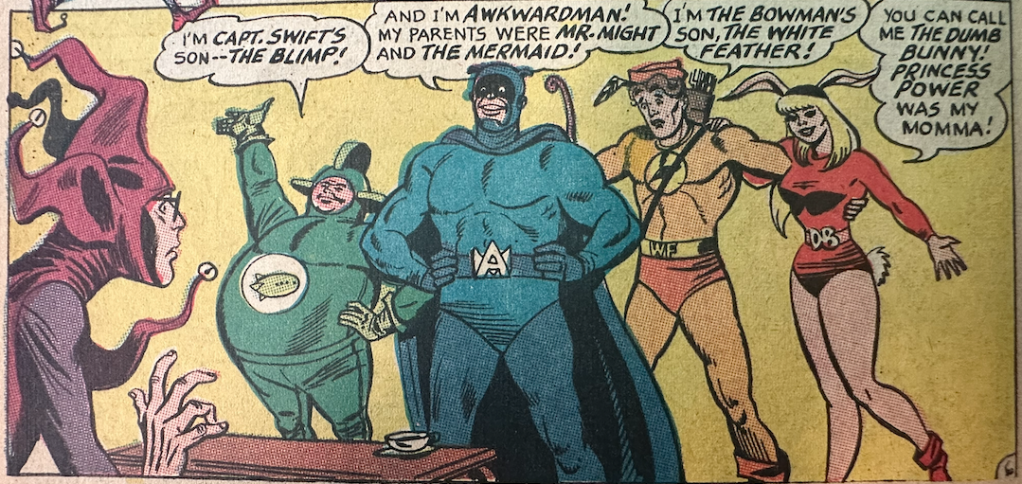
None suited for being heroes, they nevertheless followed their parents’ wish and formed a team…
The Inferior Five
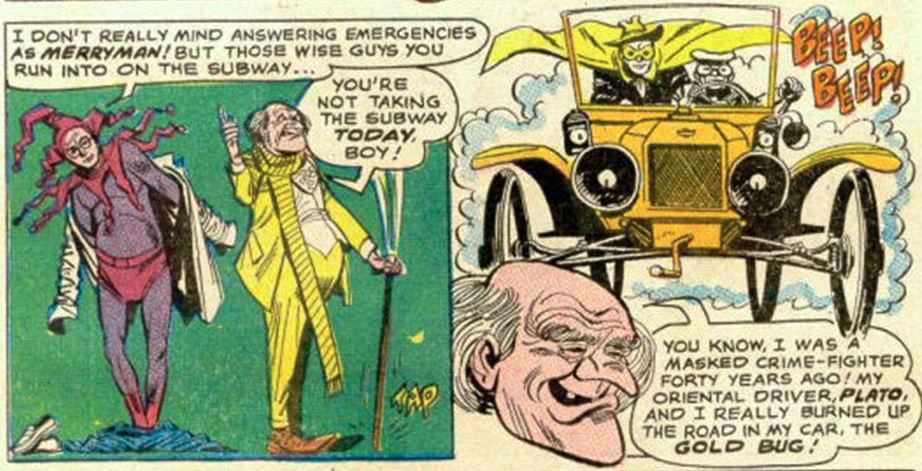
Victor moved in with his grandfather, who in his youth was also the crime fighter known as “Yellowjacket.”
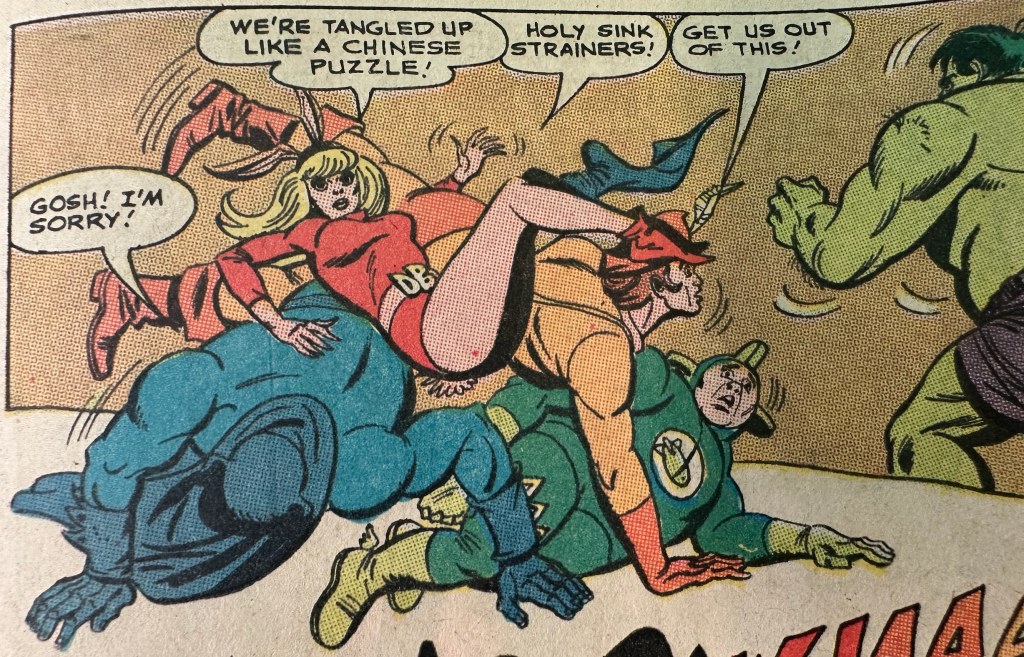
During their misadventures, it was from pure luck, coincidence, and accident that the team was at all successful.
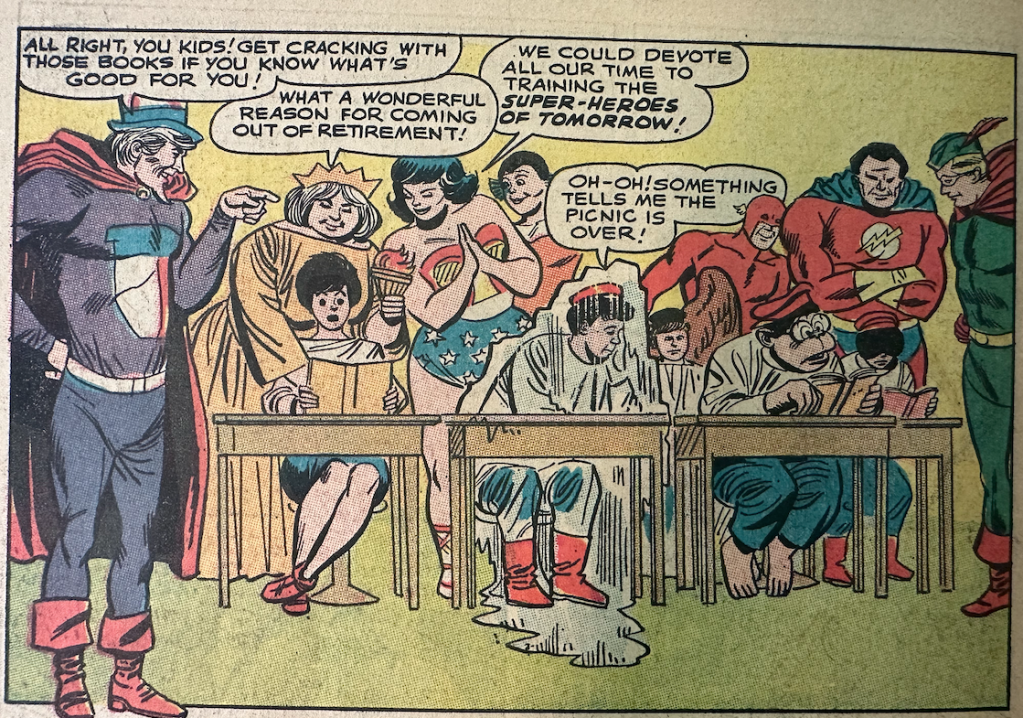
As for their parents, the Freedom Brigade took over as instructors at Dean Egghead’s “Academy for Super-Heroes” when the Inferior Five failed as teachers.
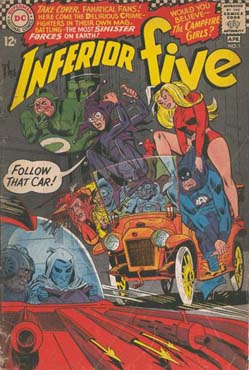
Inferior Five (vol. 1) #1
Mar/Apr 1967 (Jan. 24, 1967)
$0.12
“Five Characters in Search of a Plot”
24 pages
Writer: E. Nelson Bridwell
Penciller: Mike Sekowsky
Inker: Joe Esposito
Editor: Jack E. Miller
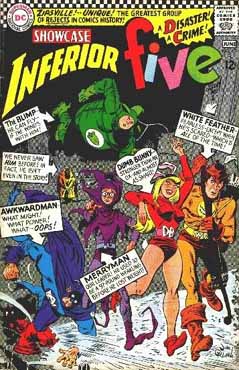
Showcase #62
May/Jun 1966 (Mar 24, 1966)
$0.12
“The Coming of the Costumed Incompetents”
24 pages
Writer: E. Nelson Bridwell
Penciller: Joe Orlando
Inker: Michael Esposito
Editor: Jack E. Miller
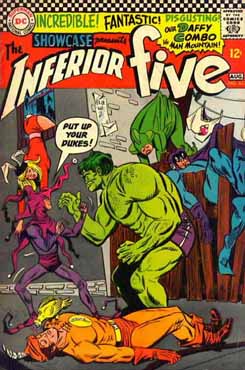
Showcase #63
July/Aug 1966 (May 24, 1966)
$0.12
“Conqueror Man-Mountain – Because He’s There”
24 pages
Writer: E. Nelson Bridwell
Penciller: Joe Orlando
Inker: Michael Esposito
Editor: Jack E. Miller

The Freedom Brigade are analogs for members of the Justice Society of American and Justice League of America:
- Patriot (Uncle Sam)
- Lady Liberty (Miss America)
- Captain Swift (The Flash & Johnny Quick)
- The Bowman (Green Arrow)
- Princess Power (Wonder Woman)
- Mr. Might (Superman)
- The Mermaid (Aquaman & Lori Lemaris)
Go-Go Checks
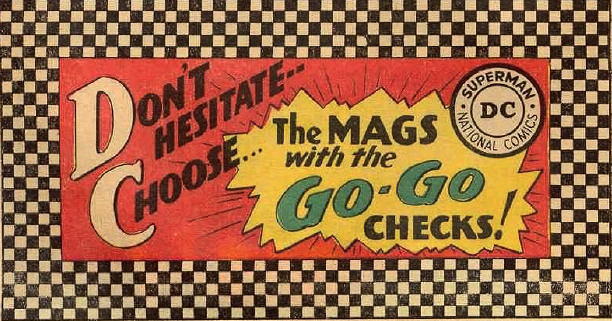
During the mid-1960s, 535 issues of DC Comics, from Action Comics to Young Romance, and including Showcase #62-64 and Inferior Five #1-3, carried a checkerboard pattern at the top of the front cover. Not only were they a stylistic choice for the times, but they helped distinguish DC from other publishers when comics were displayed vertically on the newsstands
The Inferior Five was a product of a time when the humor genre was popular in comic books. How else could you explain their adventures graduating from a three-issue stint in Showcase to a 10-issue series of their own?
The idea was conceived by editor Jack E. Miller, but then writer E. Nelson Bridwell made some creative changes to produce the end result. Joe Orlando penciled the Showcase appearances and Mike Sekowsky penciled Inferior Five #1-6.
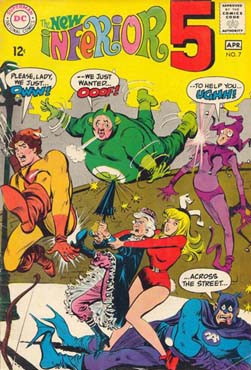
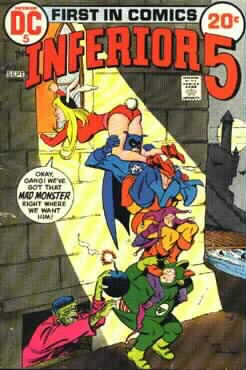
Orlando became editor with Inferior Five #7, the cover title now displaying, “The New Inferior 5.” J. Winslow Mortimer penciled issues #7-10. Then, for the final two issues, the original creative team returned, and the cover title displayed, “The Inferior 5.”
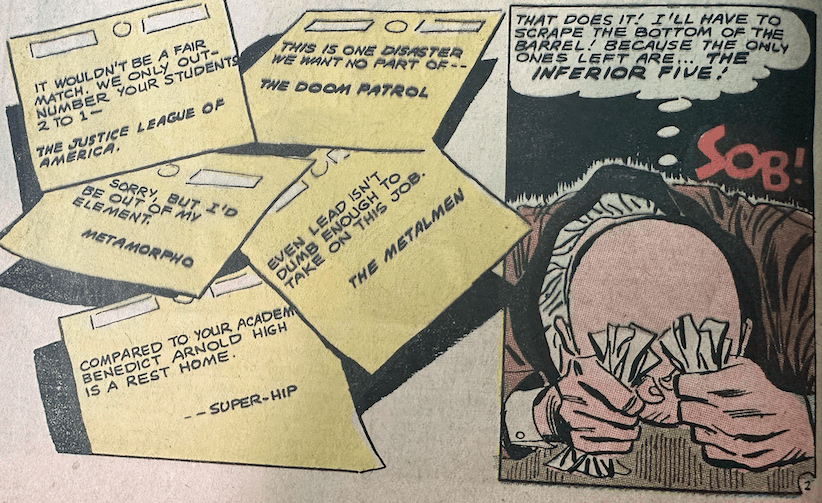
The issues of Showcase featuring the Inferior Five, as well as those of their own series, were self-aware and include meta-gags such as:
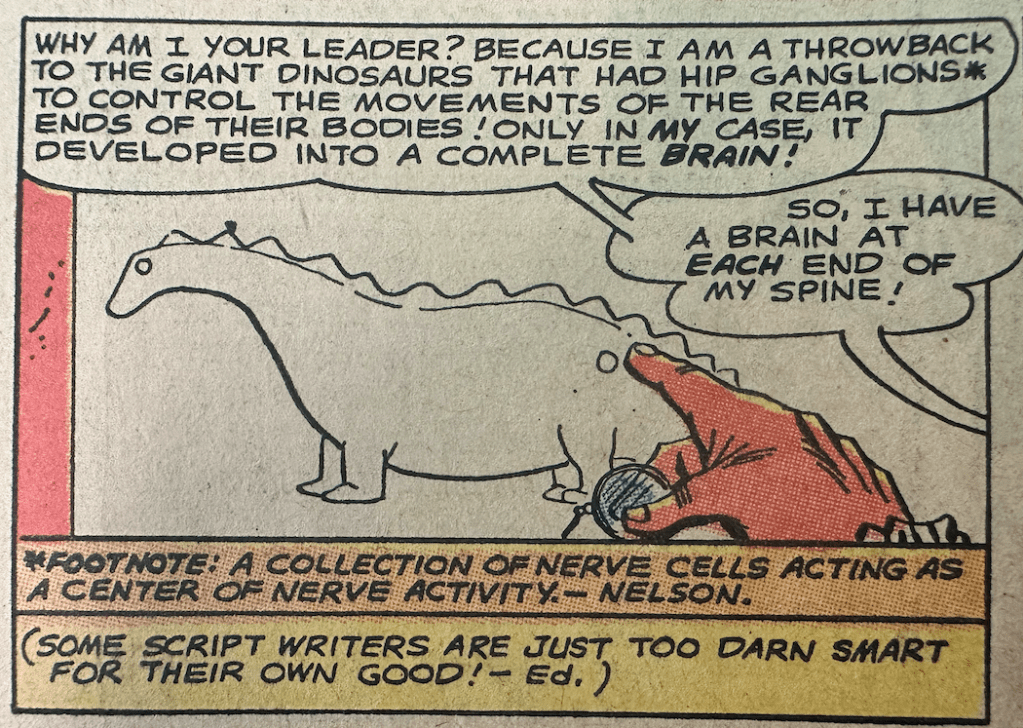
Nevertheless, they were smart enough to include those editor notes from which so many people who read comics as children claim to have actually learned something:
Finally, as an example of other DC titles launching about the same time, here’s a house ad from one of the Showcase issues:
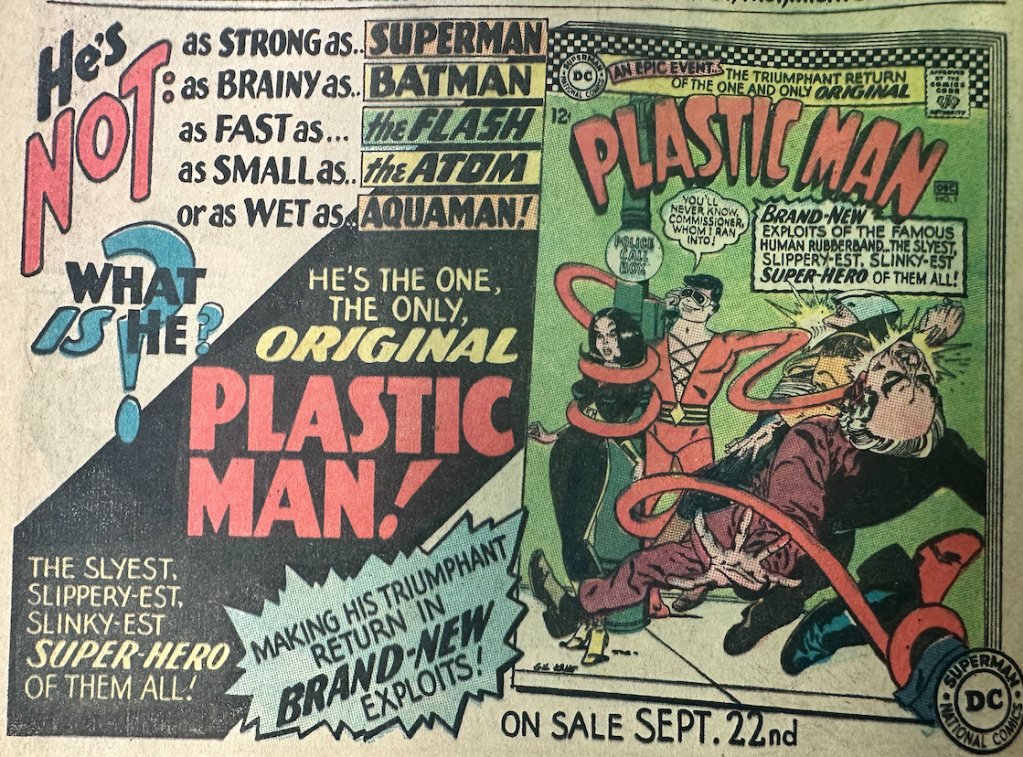
Plastic Man ran for 10 issues from cover dates Nov/Dec 1966 through May/June 1968, went on hiatus, then returned for 10 more issues from Feb/Mar 1976 through Oct/Nov 1977.
 CODEX OMNIVERSA