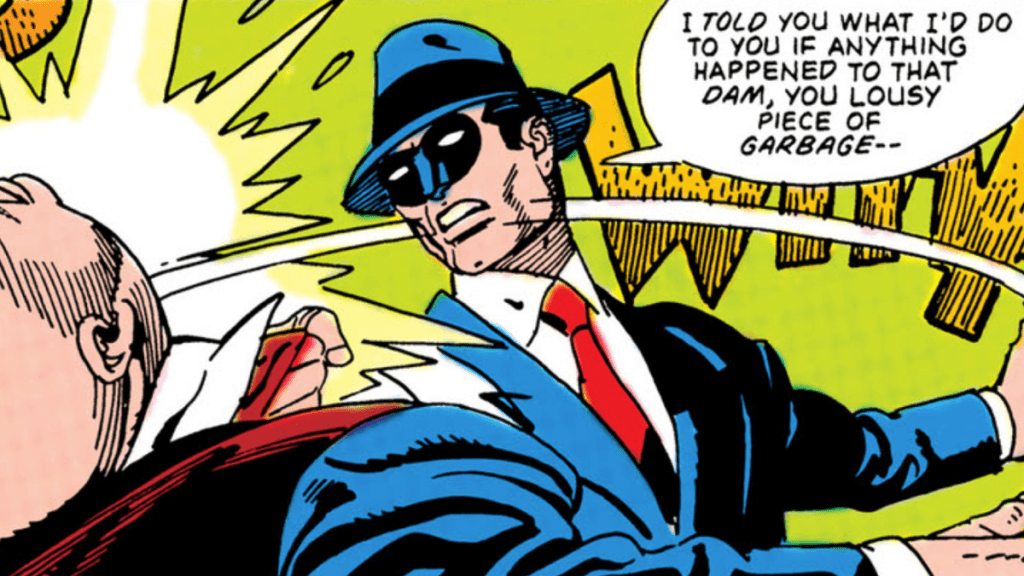
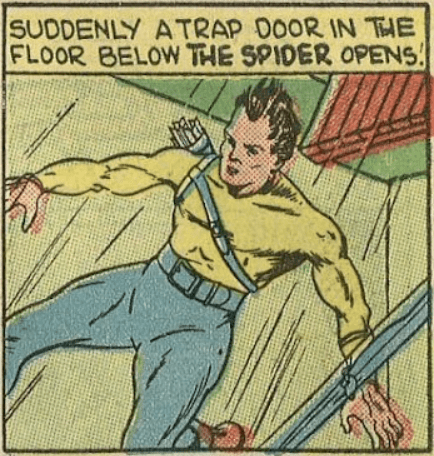
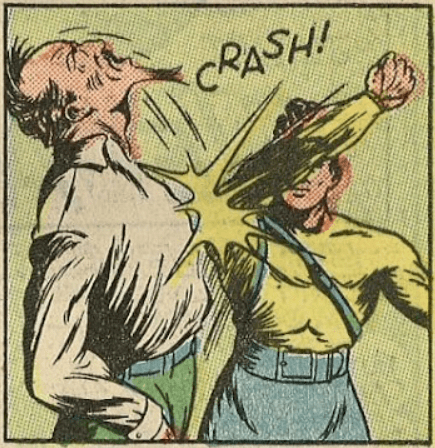
The Spider
Tom Hallaway was a millionaire playboy and big game hunter who used his skills to fight crime in the early 1940s using an alias, “the Spider.”
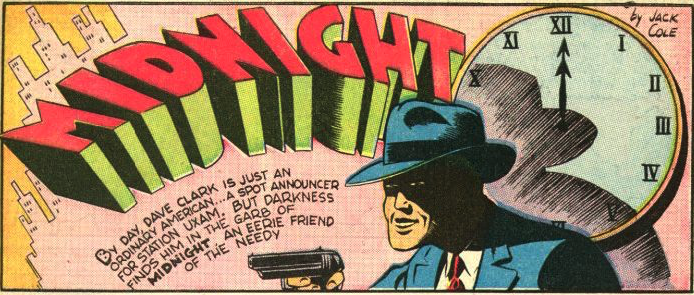
Midnight
After a long day of broadcasting, Dave Clark inadvertently stumbled into a deadly construction conspiracy and became…
Plastic Man
Patrick “Eel” O’Brien was a petty crook in the wrong place at the wrong time…
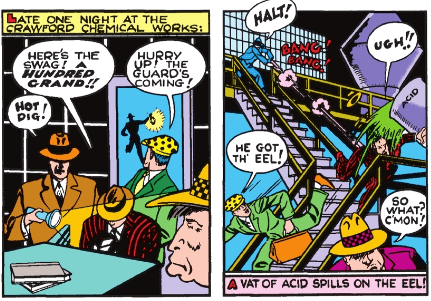
He woke up in bed at Resthaven, a mountain retreat from the troubled world…
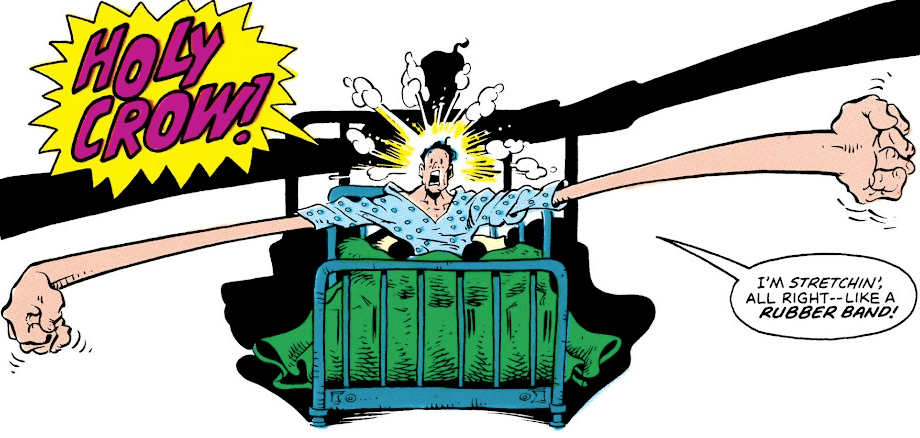
What a powerful weapon this would be… against crime! I’ve been for it long enough! Here’s my chance to atone for all the evil I’ve done!!
Indeed, he gave up being Eel O’Brien and got a job working with the chief in the F.B.I.
I got better and better at turning into more shapes than a barrelful of pretzels.
Along the way he met a pickpocket named Woozy Winks and helped him go straight, too.
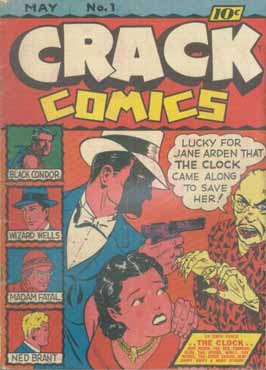
Crack Comics #1
May 1940 (March 27, 1940)
$0.10
(The Sign of the Cricket)
4 pages
Writer: Paul Gustavson
Artists: Paul Gustavson
Editor: Edward C. Cronin
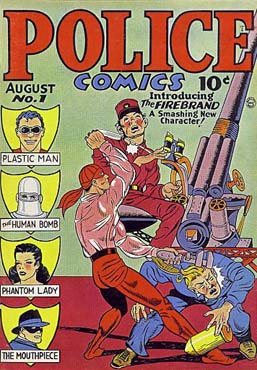
Police Comics #1
Aug. 1941 (May 14, 1941)
$0.10
(The Origin of Plastic Man)
6 pages
Writer: Jack Cole
Artist: Jack Cole
Editor: Edward C. Cronin
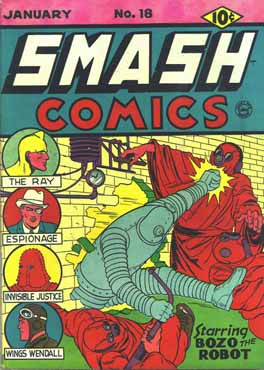
Smash Comics #18
Jan. 1941 (Nov. 20, 1941)
$0.10
(The Origin of Midnight)
6pages
Artist: Jack Cole
Editor: Edward C. Cronin
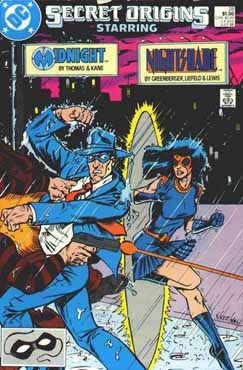
Secret Origins (vol. 2) #28
July 1988 (March 22, 1988)
$1.50
“The Secret Origin of Midnight”
19 pages
Writer: Roy Thomas
Artist: Gil Kane
Editor: Mark Waid
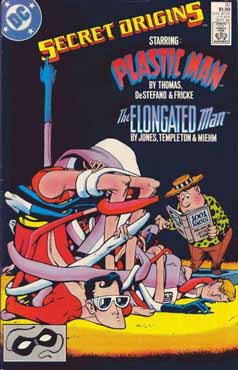
Secret Origins (vol. 2) #30
Sept. 1988 (May 24, 1988)
$1.50
“The Secret Origin of Plastic Man”
19 pages
Writer: Roy Thomas
Penciller: Stephen DeStefano
Inker: Paul Fricke
Editor: Mark Waid

Born in 1890, Everett “Busy” Arnold was a printing press salesman for Greater Buffalo Press, a large publisher for Sunday comic strips. He became partners with McNaught Syndicate, Frank Jay Markey Syndicate, and Des Moines Register and Tribune Syndicate to form Comic Favorites, Inc., better known today as Quality Comics. In October 1937, they published their first book, Feature Funnies, using the familiar formula Maxwell Charles Gaines and Dell Publishing used for Famous Funnies.
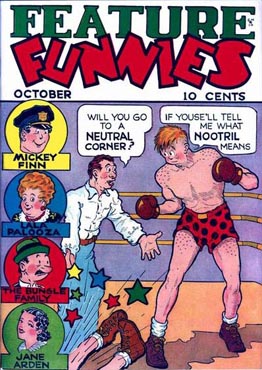
Buyouts and partnerships changed the evolution of Quality Comics; however, by 1940, Arnold had amassed the talents of Lou Fine, Jack Cole, Reed Crandall, and… Will Eisner. The timing was deliberate in introducing new titles, though. Smash Comics #1 hit the stands in August 1939, and Crack Comics #1 in May 1940. Although by this time they had introduced characters such as Invisible Hood, the Spider, Red Torpedo, Madam Fatal, and Black Condor…
…it was another year before other characters were introduced, such as Midnight, the Ray, Red Bee, Uncle Sam, Blackhawk, Miss America, Firebrand, Phantom Lady, Human Bomb, and… Plastic Man. Still to come would be Lady Luck, Manhunter (Dan Richards) and Kid Eternity.
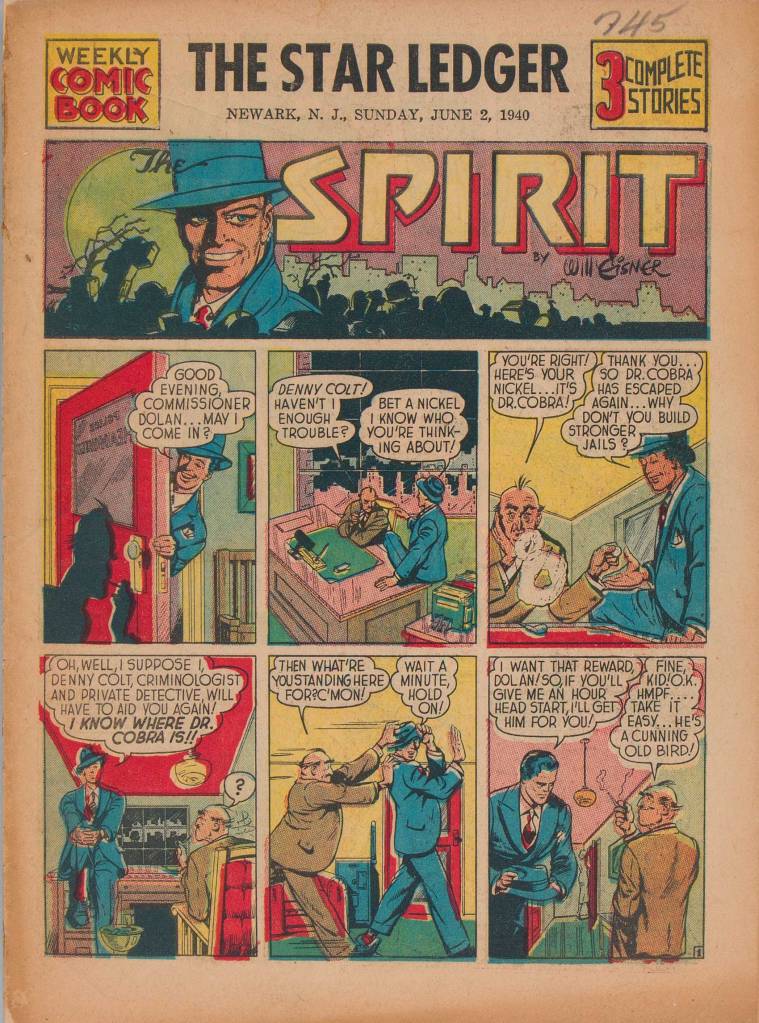
In mid-1940, Arnold commissioned an insert for the Sunday edition of Register and Tribune Syndicate newspapers to help it compete with the growing comic book industry. Eisner edited the 16-page supplement, known as “The Spirit Section,” writing and drawing most of the stories with his character, the Spirit. For a decade, Arnold reprinted Spirit stories for Quality Comics. In late-1941, Eisner was drafted into the U.S. Army, but in his absence, the character continued with ghost writers and artists.
 CODEX OMNIVERSA